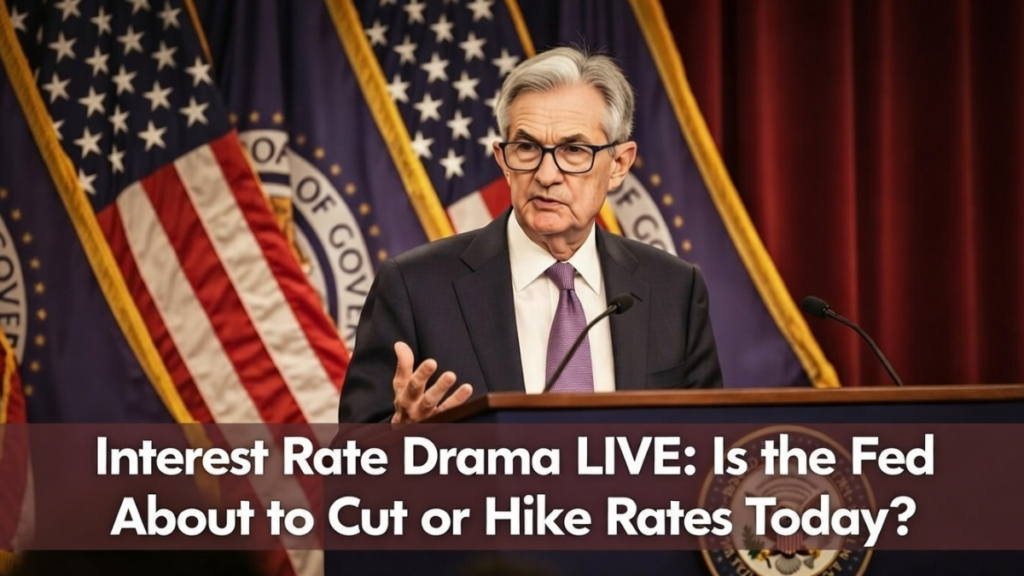
All eyes are on Washington as the latest US interest rate decision is announced today. Markets are on edge, investors are refreshing headlines, and millions of Americans are wondering whether borrowing costs are about to fall or rise again.
The decision comes from the Federal Reserve, which sets the benchmark federal funds rate that influences mortgages, credit cards, auto loans, and business financing nationwide. After months of economic uncertainty and mixed inflation signals, today’s move could shape the financial outlook for the rest of 2026.
Why This Rate Decision Matters So Much
Interest rates affect nearly every corner of the economy. When rates rise, borrowing becomes more expensive, cooling spending and investment. When rates fall, loans become cheaper, encouraging growth but potentially increasing inflation risks.
With inflation showing signs of moderation but not fully returning to target levels, policymakers face a delicate balancing act. A cut could stimulate economic activity, but it might also reignite price pressures. A hike, on the other hand, could tighten financial conditions and slow growth further.
This tension makes today’s announcement one of the most closely watched in months.
What the Economic Data Is Signaling
Recent inflation reports have shown mixed trends. Core price growth remains sticky in services such as housing and insurance, while energy prices have fluctuated sharply. Employment data has remained relatively strong, with steady job creation and moderate wage growth.
If inflation appears to be cooling sustainably, a rate cut becomes more likely. However, if price growth shows renewed strength, policymakers may hold steady or even consider tightening further.
Financial markets have been pricing in the possibility of a rate cut, but confidence is far from certain.
What Happens If the Fed Cuts Rates Today
A rate cut would likely push mortgage rates slightly lower in the coming weeks, offering some relief to homebuyers. Credit card and auto loan rates could gradually decline, easing pressure on households carrying debt.
Stock markets often react positively to rate cuts, as lower borrowing costs improve corporate profit outlooks. However, a cut could also signal concern about economic slowing, which might temper enthusiasm.
Savers, meanwhile, could see slightly reduced returns on high yield savings accounts.
What Happens If the Fed Holds or Hikes
If the Federal Reserve keeps rates unchanged, markets may interpret the decision as a wait and see approach. Borrowing costs would likely remain near current levels, maintaining financial pressure but preserving stability.
A surprise rate hike would send shockwaves through markets. Mortgage rates could climb again, stock prices might fall in the short term, and consumer borrowing would become even more expensive.
Such a move would signal that inflation remains a primary concern.
Impact on Housing and Consumer Spending
Housing markets are especially sensitive to interest rate changes. Even small shifts in mortgage rates can significantly impact monthly payments and affordability.
Consumer spending also responds to rate decisions. Higher rates discourage large purchases financed through credit, while lower rates often stimulate demand for homes, vehicles, and durable goods.
Retailers and service providers are closely watching today’s outcome to forecast demand for the rest of the year.
What Investors Are Watching in the Fed Statement
Beyond the rate decision itself, investors are analyzing the language in the official statement and press conference. Subtle wording changes can reveal whether policymakers are leaning toward future cuts, further hikes, or extended pauses.
Forward guidance often moves markets more than the immediate rate change.
If officials signal that future easing is likely, markets may rally even without an immediate cut.
Conclusion
Today’s US interest rate decision could define the economic direction of 2026. Whether the Federal Reserve cuts, hikes, or holds rates steady, the ripple effects will be felt across housing, credit markets, investments, and household budgets.
With inflation trends uncertain and growth balancing on a fine line, policymakers are navigating one of the most delicate economic environments in recent years. Americans should prepare for continued volatility as markets digest today’s outcome and look ahead to the next move.
Disclaimer: Interest rate decisions are subject to economic data and policy evaluation. Individuals should consult financial professionals before making major financial decisions.