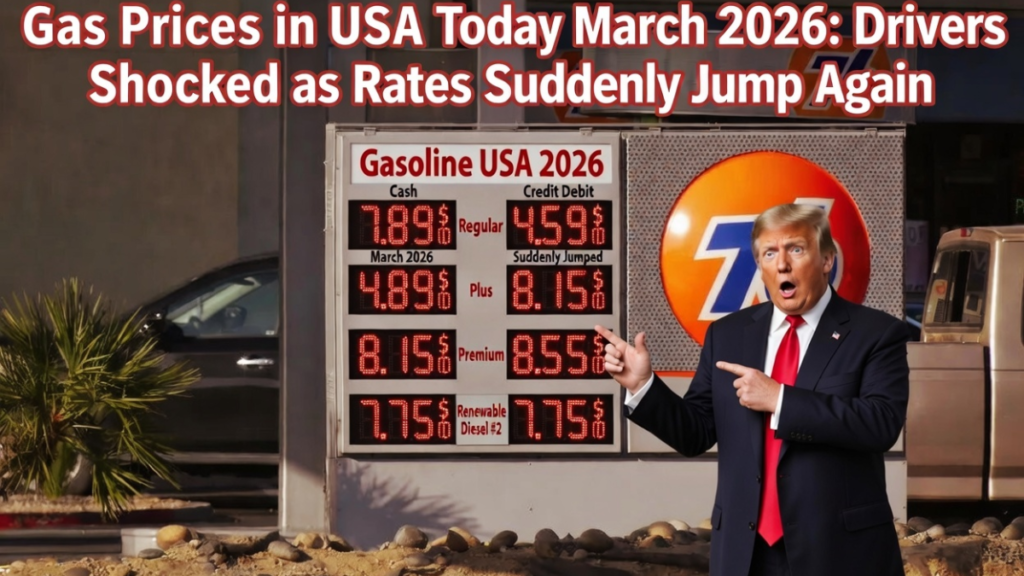
American drivers are once again feeling the squeeze at the pump. Gas prices across the United States have jumped sharply in March 2026, catching commuters and businesses off guard. After months of relative stability, the sudden spike is raising fresh concerns about inflation, travel costs, and household budgets.
According to market monitoring data tracked by the U.S. Energy Information Administration, fuel price volatility has returned due to a mix of global supply pressure, refinery maintenance slowdowns, and seasonal demand increases.
Here is what is driving the surge and what experts expect next.
Why Gas Prices Jumped in March 2026
Several factors are contributing to the latest increase. Spring refinery maintenance is limiting supply just as travel demand begins to rise. At the same time, global crude oil markets have reacted to geopolitical uncertainty and production adjustments.
Crude oil benchmarks have edged higher in recent weeks, directly influencing retail gasoline prices. When wholesale fuel costs climb, gas stations adjust pump prices quickly to reflect the change.
In some regions, prices have risen 20 to 35 cents per gallon within weeks, surprising drivers who expected seasonal stability.
National Average vs Regional Differences
While the national average price has climbed, regional variations remain significant.
| Region | Average Price Trend March 2026 |
|---|---|
| West Coast | Highest national averages |
| Midwest | Moderate increases |
| South | Slightly below national average |
| Northeast | Steady but rising |
| Gulf Coast | Lower than coastal states |
States with stricter environmental fuel blends and higher fuel taxes typically see larger price swings. California and parts of the West Coast remain among the most expensive markets.
How Much Are Drivers Paying Now
Although prices vary daily, many metropolitan areas are reporting averages well above $3.75 per gallon, with some crossing the $4 mark again.
For families commuting daily or operating delivery services, even a 25 cent increase per gallon can translate into significant monthly expenses.
Fuel sensitive industries such as trucking and rideshare services may pass higher costs on to consumers through increased service fees.
Is This the Start of Another Price Spike
Energy analysts suggest the March surge may be partly seasonal. Spring and summer typically bring higher demand due to increased travel, especially ahead of holiday weekends.
However, global production decisions by oil exporting nations and refinery output levels will heavily influence whether prices stabilize or continue climbing into summer.
If crude oil prices remain elevated, retail gasoline prices may stay high through the second quarter of 2026.
What’s Impacting Oil Markets
Oil supply remains closely watched worldwide. Production adjustments by major oil producing nations can quickly ripple through global markets.
In addition, weather related disruptions, refinery outages, and shipping constraints can tighten supply temporarily.
Currency fluctuations also play a role. A weaker dollar can contribute to higher imported oil costs, indirectly influencing US pump prices.
How Drivers Can Reduce Fuel Costs
While consumers cannot control global oil markets, there are ways to minimize impact.
Maintaining proper tire pressure improves fuel efficiency. Avoiding aggressive acceleration and excessive idling can reduce consumption. Comparing local station prices through fuel tracking apps can also save money.
Carpooling and planning combined errands may help households offset rising pump costs.
Will Gas Prices Drop Soon
Short term forecasts suggest prices may remain elevated through late spring. If refinery output increases and crude oil markets stabilize, some relief could arrive before peak summer travel.
However, energy markets remain sensitive to global developments, making precise predictions difficult.
Drivers should prepare for continued volatility rather than expecting an immediate sharp decline.
Conclusion
The sudden jump in gas prices in March 2026 has once again reminded Americans how quickly fuel markets can shift. Driven by refinery maintenance, seasonal demand, and global oil pressures, the surge is impacting household budgets nationwide.
While the increase may be partly seasonal, continued volatility is likely in the coming months. Monitoring local prices and practicing fuel efficient driving habits can help ease the financial burden during this period of uncertainty.
Disclaimer: Fuel prices fluctuate daily based on market conditions. Regional rates may vary significantly depending on taxes and supply factors.